Find two 8mm and 1m long round bars, sharpen one end of them as auxiliary test rods, and insert them into the ground 5m away from both sides of the grounding body A to be tested, the depth should be more than 0.6m, and keep the three in a straight line.
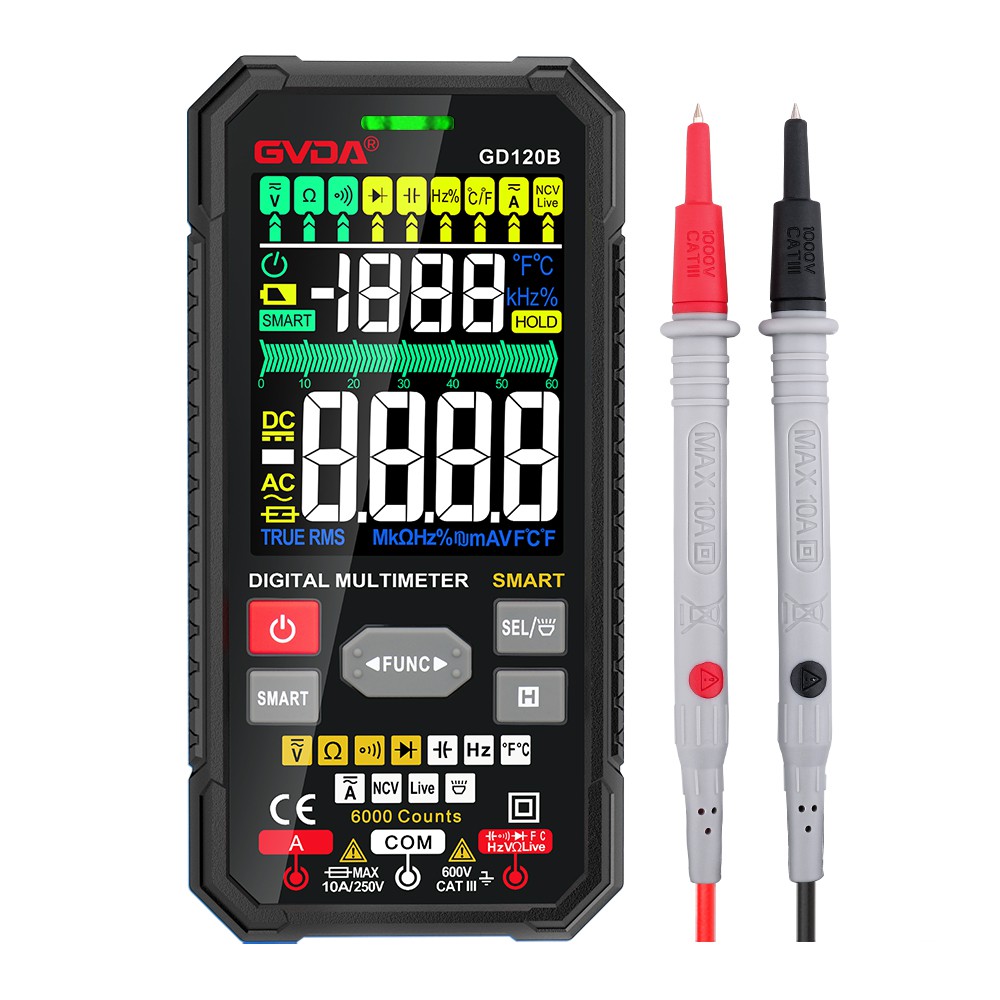
Then use a multimeter (R*1 gear) to measure A and B; the resistance values between A and C are recorded as RAB, RAC, RBC respectively, and then the grounding resistance value of grounding body A can be obtained by calculation.
Because the grounding resistance refers to the contact resistance between the grounding body and the soil. Let the grounding resistances of A, B, and C be RA, RB, and RC, respectively. Then let the resistance of the soil between A and B be RX, because the distance between AC and AB is equal, the soil resistance between A and C can also be RX; and because BC=2AB, the soil resistance between B and C is approximately 2RX, then:
RAB=RA plus RB plus RX. . . . . .
①RAC=RA plus RC plus RX. . . . . .
②RBC=RB plus RC plus 2RX. . . . . .
③Compose ① plus ②-③ to get: RA=(RAB plus RAC-RBC)/2. . . . . . ④
Measured example: The measured data of a grounding body are as follows: RAB=8.4∩, RAC=9.3∩, RBC=10.5∩. but:
RA=(8.4 plus 9.3—10.5)/2=3.6(∩)
Therefore, the grounding resistance value of the grounding body A under test is 3.6∩.